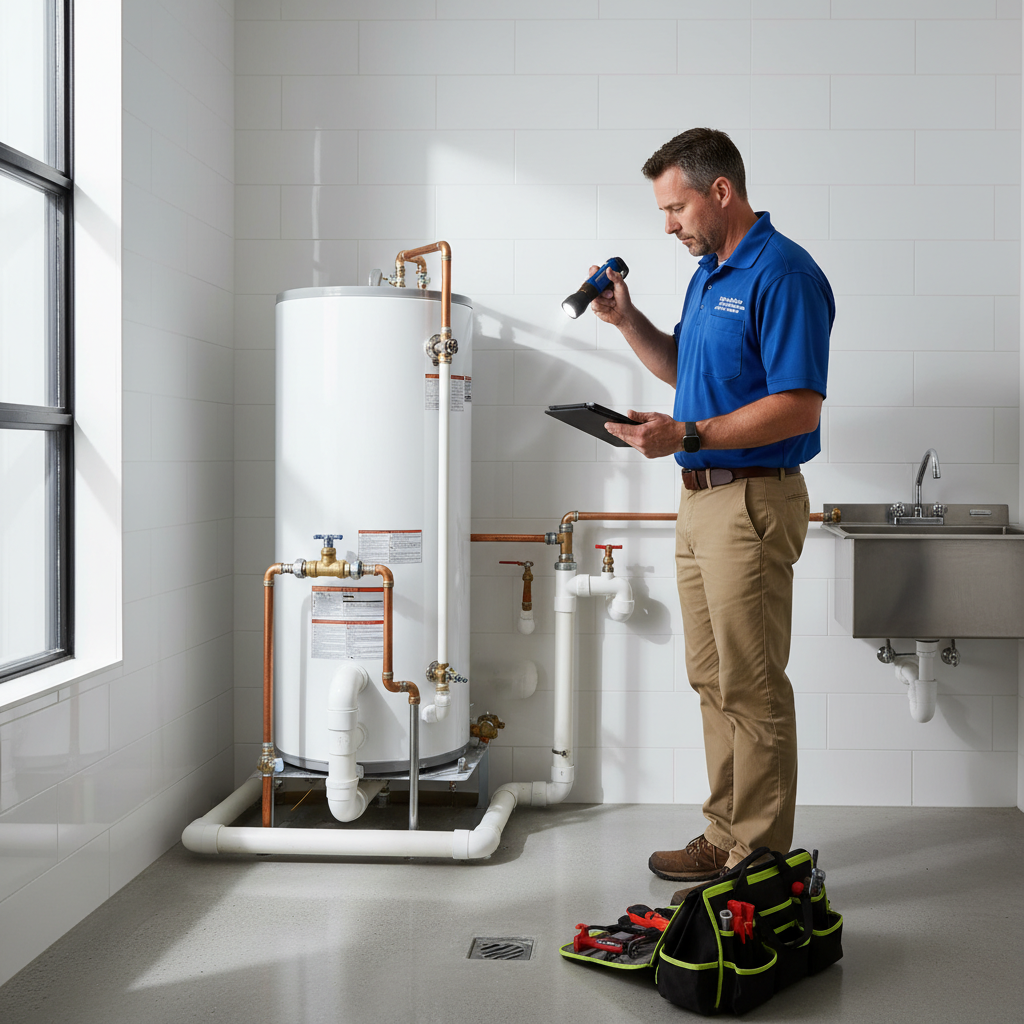
Plumbing inspection cost refers to the total investment to evaluate your water supply, drain-waste-vent lines, and fixtures for safety, leaks, and performance. For Suite 2000 property owners and buyers, ASM Home & Commercial Inspection delivers certified plumbing evaluations as part of whole-home and commercial inspections, with same-day PDF reports that highlight priority risks and maintenance opportunities.
By Asmhomeinspection • Last updated: 2026-05-30
Above-Fold: What a Plumbing Inspection Covers Today
A modern plumbing inspection evaluates visible supply and drain lines, fixtures, water heater, shutoff valves, venting, and drainage performance. Inspectors also spot red flags like moisture intrusion, cross-connection risks, and aging materials. ASM includes this plumbing scope within certified home and commercial inspections and delivers an easy-to-read, same-day PDF report.
When most people hear “plumbing inspection,” they think of leaks. That’s part of it, but a complete evaluation looks at how the entire system breathes, drains, and protects occupants. We document conditions so you can plan repairs, negotiate confidently, or maintain your property with fewer surprises.
For GTA buyers, sellers, investors, and managers, our certified InterNACHI and CCPIA expertise means plumbing findings are placed in the context of the whole building. That context matters when you’re comparing multiple homes, vetting a new build, or signing a commercial lease.
At a Glance: Summary
Use plumbing inspections to reduce risk before purchase, verify workmanship on new builds, and prevent hidden water damage. Focus on scope, access, property age, material types, add-on tests (like sewer camera), and reporting speed. ASM serves Suite 2000 and the GTA with certified inspections and same-day PDF reports.
- Scope drives value: Visual checks, functional testing, and targeted add-ons like drain camera or water quality testing address different risks.
- Age and materials matter: Galvanized or polybutylene supply lines, cast-iron or clay drains, and DIY alterations change inspection depth.
- Documentation wins deals: Same-day, photo-rich PDFs help you negotiate and prioritize repairs with confidence.
- Local insight: We factor in regional construction practices and climate patterns that influence moisture and freeze risks.
Local considerations for Suite 2000
- Seasonal swings can stress water heaters and exterior hose bibbs; schedule pre-winter checks to catch slow leaks and insulate exposed piping.
- High-turnover rental units benefit from move-in plumbing documentation to avoid security-deposit disputes and clarify fixture condition.
- Older multifamily buildings may have mixed pipe materials; a camera look at main drains helps reveal root intrusion and settlement issues.
What Is a Plumbing Inspection?
A plumbing inspection is a structured evaluation of supply and drain systems, fixtures, and related equipment to identify defects, safety risks, and maintenance needs. It blends visual assessment with functional testing and reporting so owners and buyers can act on reliable, photo-documented findings.
We define “plumbing” broadly: water supply piping, shutoffs, fixtures, traps, venting, drains, sumps, and water-heating equipment. In commercial facilities, we also consider usage patterns, occupancy loads, and access limitations that affect performance and compliance.
For residential clients, a plumbing inspection is integrated into our whole-home assessment. For commercial clients, it’s scoped within a system-by-system evaluation tailored to property type—retail, office, industrial, hospitality, healthcare, or education. In every case, the output is a same-day PDF that highlights safety concerns, urgent repairs, and preventative maintenance.
- Safety: Backflow and cross-connection concerns, scald risk, missing discharge piping, and leaks near electrical components.
- Function: Fixture flow, drain performance, venting behavior, and water heater operation.
- Durability: Pipe material condition, corrosion, improper slopes, unsupported runs, and signs of past failures.
Why Plumbing Inspections Matter for GTA Buyers and Owners
Plumbing issues escalate fast. Inspections prevent hidden water damage, confirm workmanship in new builds, and reveal aging materials before they fail. For GTA buyers and owners, documented findings support negotiations, budget planning, and safer occupancy.
Water is relentless. Small drips become structural issues; slow drains become backups. Early detection reduces repair scope and downtime, which is vital for families planning a move-in date and for businesses coordinating tenant turnover or production schedules.
In our experience across the GTA, three pain points dominate: moisture intrusion, unknown pipe materials, and “invisible” drain problems. Targeted inspections address each one, and our same-day report helps you act while timelines are tight.
- Buyers: Use findings to renegotiate, request credits, or line up contractors before closing.
- Sellers: Pre-listing insights avert last-minute surprises and boost credibility with clean documentation.
- New builds: Punch-list water heater venting, fixture leaks, or missing anti-tip brackets before warranty windows close.
- Commercial: Validate restrooms, breakrooms, and specialty plumbing (e.g., grease lines) to avoid operational interruptions.
How Plumbing Inspection Cost Is Determined
Plumbing inspection cost depends on scope depth, property size and access, age and pipe materials, add-on tests (like sewer camera), and reporting requirements. Define goals up front and select only the evaluations that address your risks to keep spending efficient.
There’s no one-size price because properties differ. Instead of chasing a number, align inspection depth to risk. A newer condo with PEX supply and PVC drains needs a different approach than a mid-century home with cast-iron stacks and galvanized lines.
We organize the decision into practical levers you can control:
- Scope depth: Visual-only vs. visual plus functional testing vs. targeted add-ons (e.g., drain camera, water quality test).
- Property factors: Unit count, fixture density, crawlspace/basement access, ceiling finishes that limit visibility.
- Material risks: Galvanized, polybutylene, kitec, cast-iron, or clay indicate higher diligence.
- Timeline: Same-day reporting is standard with ASM; tight transaction windows may necessitate coordinated access to all units/areas.
- Documentation needs: Some lenders, insurers, or facility managers require specific photo angles or verification language.
When we scope plumbing within a whole-home inspection, we right-size the work to your strategy—purchase, pre-listing, warranty, or annual maintenance—so you pay for insight, not for unnecessary steps.
Types and Methods of Plumbing Inspections
Common plumbing inspection methods include visual/functional assessments, sewer camera scoping, moisture mapping, pressure testing (where appropriate), and water quality screening. Combining methods based on property age and symptoms reveals issues earlier and reduces surprise repairs.
Core methods and when to use them
- Visual + functional assessment: Inspect exposed supply and drain lines, shutoffs, traps, vents, water heater, and run fixtures to observe pressure and drainage behavior.
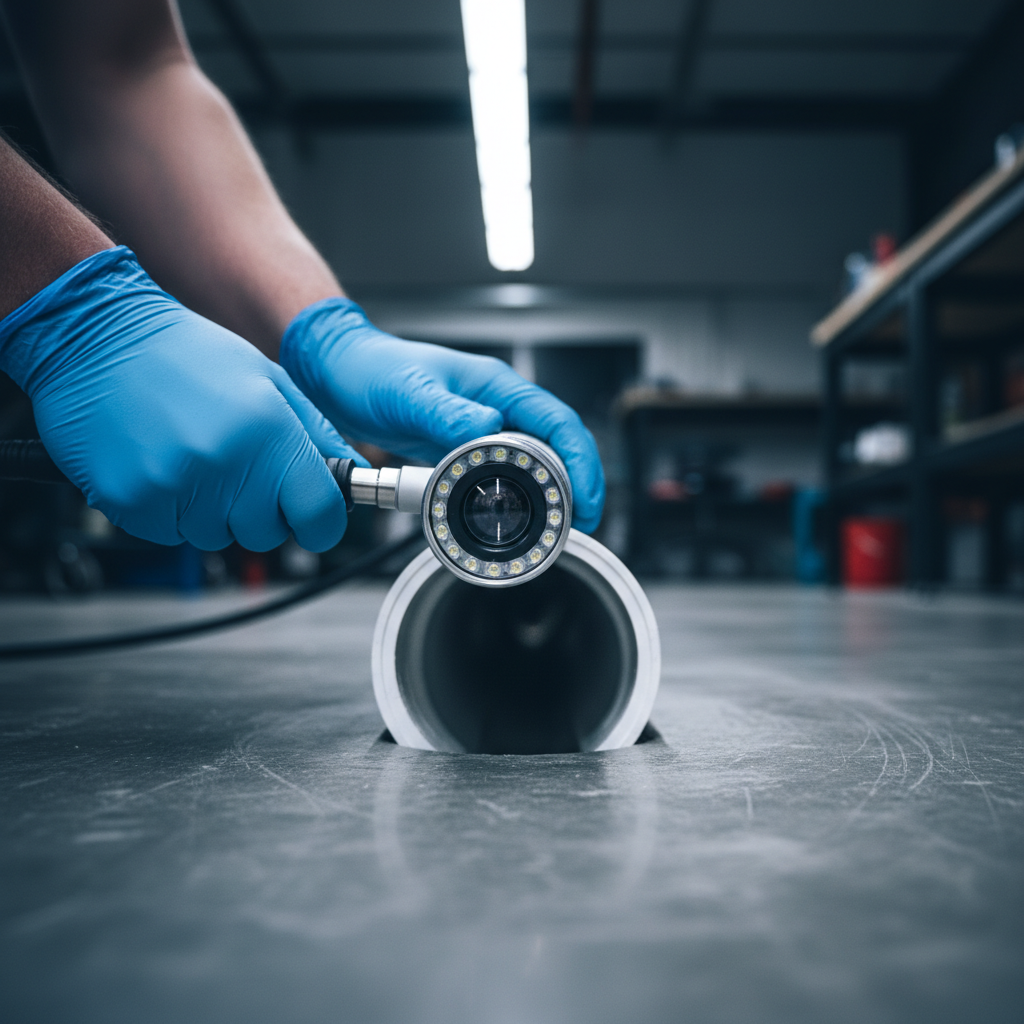
- Drain/sewer camera: Scope main laterals and branch lines for roots, cracks, offsets, or sludge that visual checks cannot confirm.
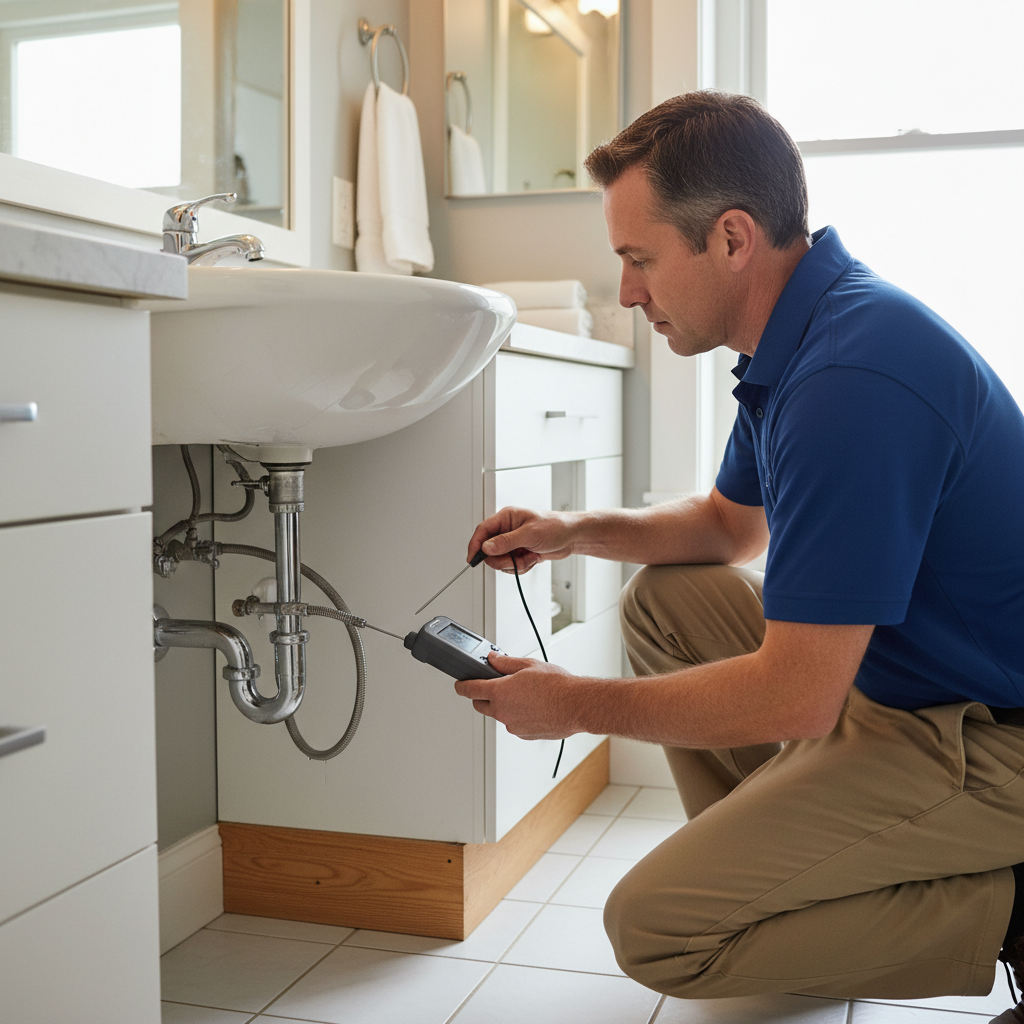
- Moisture mapping: Use moisture meters and IR scanning to trace active leaks behind finishes around tubs, showers, vanities, and ceilings below bathrooms.
- Targeted pressure checks: Evaluate static and dynamic pressure and observe pressure regulators/expansion tanks where installed.
- Water quality screening: Optional chlorine, hardness, iron, or lead screening to inform fixture wear and filtration needs.
| Method | Reveals | Best for | Typical tools |
|---|---|---|---|
| Visual + functional | Leaks, slow drains, venting issues, missing safety features | All properties; baseline assessment | Flashlight, thermal camera, basic hand tools |
| Drain camera | Root intrusion, cracks, offsets, dips, sludge | Older homes, frequent backups, large commercial restrooms | Video borescope, locator |
| Moisture mapping | Hidden leaks, past water events, active seepage paths | Bathroom ceilings, below showers, exterior walls | Moisture meter, IR scanner |
| Pressure observation | Over/under pressure, failing regulators | Multi-story buildings, environments with pressure complaints | Pressure gauge, manometer |
| Water quality | Corrosivity, scaling, taste/odor contaminants | New occupants, sensitive equipment, older wells | Basic test kits, lab samples |
For drain diagnostics, insights from industry drain-camera overviews emphasize how video scoping confirms defects you can’t see at fixtures. That’s why we recommend camera work when age, backups, or cast-iron stacks are in play.
Best Practices to Control Your Inspection Spend
Right-size the scope to your risk, consolidate access in one visit, and prioritize problem areas. Ask for photo-rich, same-day reporting to act fast. This keeps plumbing inspection cost aligned with decisions you need to make now.
- Start with goals: Buying? Selling? Annual maintenance? Align scope to decisions and deadlines.
- Bundle intelligently: Whole-home or commercial inspections surface cross-system issues, often more efficient than one-off checks.
- Target add-ons: Add a camera only when age/symptoms justify it; add moisture mapping where stains or musty odors exist.
- Coordinate access: Ensure utility rooms, crawlspaces, and all bathrooms/kitchens are unlocked to avoid repeat trips.
- Request same-day PDF: Our same-day report speeds negotiations and contractor scheduling.
Here’s the thing: plumbing risks concentrate in just a few zones—bathrooms, kitchens, mechanical rooms, and main laterals. Focus there first. If findings are clean, you’ve controlled spend and risk. If not, you have documented proof to act.
Tools and Resources We Use (and Recommend)
Professional plumbing inspections rely on high-lumen lighting, thermal imaging, pin and pinless moisture meters, borescopes for drains, pressure gauges, and well-organized reporting tools. The right tools shorten inspections and produce clearer, more defensible findings.
Our kits are built for speed and clarity. We combine lighting with mirrors and cameras to see behind and below. Moisture meters confirm what the eye suspects. Borescopes document inside drains. And our digital template ensures consistent photos and notes in your same-day PDF.
- Lighting + mirrors: See behind traps, under sinks, and around tight clearances.
- Thermal imaging: Spot temperature anomalies that hint at active leaks or poor insulation near pipes.
- Moisture meters: Verify elevated readings around baseboards, showers, and ceiling stains.
- Drain camera + locator: Map defects and their depth/location for contractors.
- Pressure gauges: Observe static/dynamic pressure and regulator function.
Many trade articles highlight how drain cameras reduce exploratory demolition by confirming clogs and breaks before work begins. See this drain camera explainer for a practical walk-through of what the scope can reveal and why it informs next steps.
What It Looks Like On-Site (Step-by-Step)
Expect a walkthrough of wet rooms and mechanical spaces, fixture testing, targeted access to cleanouts, and photo documentation. You’ll receive a prioritized, same-day PDF with recommendations grouped by safety, repair, and maintenance.
- Kickoff: Confirm areas, access, and any reported symptoms (odors, slow drains, low pressure).
- Supply review: Inspect visible piping, shutoffs, and water heater; observe temperature/venting and TPR discharge.
- Fixture testing: Run sinks, tubs, and showers; flush toilets; watch for hammering, slow drains, or cross-connection risks.
- Drain diagnostics: If warranted, use a camera at cleanouts to record condition and locate defects.
- Moisture check: Meter around baseboards, tubs, and ceilings below bathrooms; corroborate with thermal imaging.
- Wrap-up: Debrief key findings; deliver your same-day PDF with photos and priority levels.
The output isn’t just a list. It’s a plan of action you can hand to your agent, property manager, or contractor—fast.
Real-World Scenarios: Case Studies
Plumbing inspections prevent surprise repairs and support smarter negotiations. These brief cases show how aligning scope to risk—camera when age suggests, moisture mapping when stains appear—saves time and headaches.
Buyer due diligence in a mid-century home
A GTA buyer asked us to integrate a camera scope into a whole-home inspection after noticing slow drains. The video showed a cracked cast-iron stack and an offset in the main lateral. With clear documentation, the buyer negotiated repairs before closing, avoiding a disruptive post-move excavation.
Pre-listing confidence for a condo seller
A condo seller requested a plumbing-focused pre-listing check. We verified PEX supply and PVC drains in good condition, corrected two minor leaks, and confirmed water heater compliance. The clean, same-day report gave buyers confidence and shortened conditional periods.
Commercial restrooms with chronic backups
A retail property manager struggled with recurring weekend backups. A scheduled camera inspection mapped a belly in the main. The documented depth and location allowed a targeted repair during off-hours, preventing future closures and lost revenue.
Tools, Resources, and References
Use reliable tools and clear references to make better decisions. For camera work, trade explainers show how video confirms drain defects. For general prep, review service checklists and be ready with access to cleanouts and mechanical rooms.
For another perspective on what a plumbing inspection entails and why it helps planning, see this plumbing inspection overview. While providers vary, the core idea is consistent: evaluate, document, decide. Our role is to translate findings into a practical action plan the same day.
- Have your questions ready—fixtures of concern, past repairs, or odors you’ve noticed.
- Ensure access—utility rooms, under-sink areas, and drain cleanouts if present.
- Plan next steps—line up contractors or negotiate based on the photo-documented report.
If you need a certified, whole-building perspective, our residential and commercial inspections place plumbing in the context of roof, structure, electrical, and HVAC performance.
FAQ: Plumbing Inspections
These concise answers address common questions about plumbing evaluations, timing, scope, and reporting. Use them to plan your inspection strategy and to communicate expectations with agents, tenants, or contractors.
What does a plumbing inspection include?
It covers visible supply and drain lines, shutoffs, traps, venting, fixtures, and water-heating equipment. We run fixtures, observe drainage and pressure, check for moisture, and flag safety issues. When age or symptoms suggest, we add a drain camera to document hidden defects.
When should I schedule a plumbing inspection?
Schedule before buying or listing, after major renovations, at the end of new-construction warranty periods, and annually in high-use properties. If you notice odors, stains, slow drains, or pressure swings, book sooner to prevent escalating damage.
Do you provide a same-day report?
Yes. ASM delivers a same-day, photo-rich PDF with prioritized recommendations. You’ll see what we saw at each location, grouped by safety, repair, and maintenance so you can take action quickly during tight timelines.
Is a sewer camera always necessary?
No. Use it when property age, recurring backups, cast-iron or clay drains, or renovation plans justify the added insight. For newer systems with clean performance, a visual and functional assessment may be sufficient.
Key Takeaways
Treat plumbing inspections as risk control, not a checkbox. Right-size scope, consolidate access, and document findings clearly. Fast, photo-rich reporting helps you negotiate, plan repairs, and protect your property.
- Define goals and scope first to align effort with decisions.
- Use targeted add-ons—camera, moisture mapping—when age or symptoms warrant.
- Insist on same-day, photo-documented reporting to move fast.
- Think whole building: plumbing interacts with structure, electrical, and HVAC.
Next Steps and CTA
Need certified insight you can act on today? Book a comprehensive inspection with same-day reporting. We’ll right-size the plumbing scope to your goals and timeline.
Ready to schedule? Contact ASM Home & Commercial Inspection for residential and commercial inspections across the GTA—pre-purchase, pre-listing, new construction, move-in, and annual maintenance. Prefer a quick consult first? We’re happy to help you choose the right scope.