Compare Attic Inspection Options Before Choosing One
“Attic inspection” can mean four different services. A pre-purchase home inspector may observe the accessible attic as part of the whole house. A focused inspector may revisit a moisture or insulation concern. A roofer, electrician, engineer, hygienist or remediation professional may assess a specialist problem. An energy adviser measures efficiency and air leakage. Choosing the wrong scope produces a report that cannot answer the decision.
ASM Home Inspection’s frozen site profile includes attic review within residential and commercial inspection services and lists a Toronto phone scheduling route. Confirm current credentials, standards, service area, access policy and report timing directly instead of relying on the profile summary.
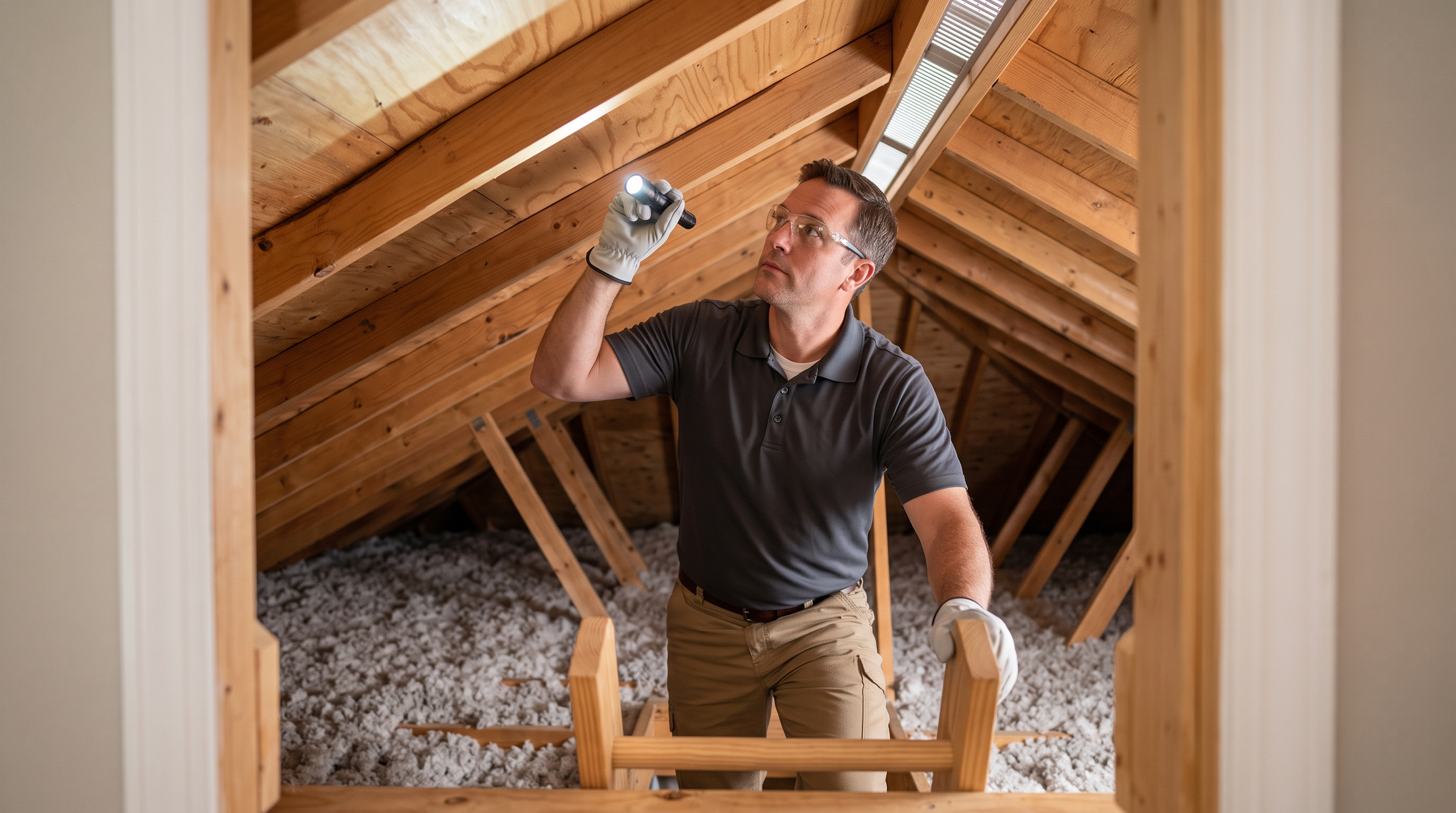
Compare four attic inspection options
| Option | Best fit | Typical strength | Important limit |
|---|---|---|---|
| General home inspection | Pre-purchase, pre-listing or broad maintenance decision | Connects attic observations to roof, exterior, interior, electrical and HVAC context | Visual, time-limited and restricted by access and standards |
| Focused attic review | Follow-up on staining, frost, insulation or ventilation questions | More time on a defined attic concern and comparison over time | Still may not diagnose concealed or specialist causes |
| Qualified specialist assessment | Suspected structural, roof, electrical, pest, mould or hazardous-material issue | Discipline-specific diagnosis, testing or repair design | Narrower scope; may not assess the whole building |
| Energy evaluation | Efficiency baseline and retrofit planning | Measurements such as insulation level and blower-door air leakage | Not a substitute for a real-estate condition inspection or specialist diagnosis |
Some houses need a sequence: a general inspection identifies a concern, then a specialist defines its cause and repair. That is not duplication; the scopes answer different questions.
Understand the attic systems being compared
Natural Resources Canada’s roof and attic guidance connects moisture to roof or flashing leaks, indoor air leakage, bathroom or kitchen exhaust, insulation condition and blocked ventilation. An attic should therefore be read as a system, not a checklist of insulation depth alone.
- Roof sheathing and framing for staining, deterioration or visible damage.
- Insulation type, distribution, condition and obvious gaps.
- Air leakage clues around hatches, wiring, plumbing and ceiling penetrations.
- Ventilation openings and whether insulation or debris obstructs them.
- Bathroom or kitchen exhaust termination where visible.
- Electrical components and heat-source clearances without disturbing them.
- Signs of pests, condensation, frost or visible growth.
- Safe attic hatch, walkway and access limitations.
One observation rarely proves the source. A stain may be dry and historic; a clear day may not reveal rain entry; winter frost may not appear in summer.

Treat access as part of the result
Inspectors should not walk where framing, insulation, wiring, clearance or suspected contamination makes entry unsafe. A hatch-only view, partial entry, drone, camera pole or infrared scan each has limits. Ask the report to state where the inspector went, what was obstructed and which method was used.
NRCan warns not to disturb vermiculite insulation because of potential asbestos concerns. Do not move insulation, open suspect materials or squeeze past unsafe electrical and structural conditions to “get a better look.” Appropriate testing and specialist advice may be required.
Match the option to the decision
Buying a house under a condition period
Begin with a whole-home inspection that includes the accessible attic and provides written limitations. If significant staining, structural movement, suspect material or wiring appears, use the condition time to obtain the right specialist.
Investigating a ceiling stain
A focused review can connect the attic location with roof, plumbing, exhaust and indoor moisture clues. Timing during or after rain may matter. A roofer or other specialist may be needed to diagnose and repair.
Planning more insulation
Do not cover moisture or air-leakage problems. NRCan says to correct moisture before adding insulation. An energy evaluation may help quantify air leakage and insulation, while contractors and building officials advise on safe retrofit details.
Checking visible mould-like growth
A home inspector can document a visible concern and moisture clues within scope, but treatment design and health questions fall elsewhere. Health concerns go to a health-care professional; remediation questions go to a qualified specialist.
Reviewing roof work
Ask for scope that connects exterior installation, flashings, penetrations and attic evidence. The inspection date and weather may limit conclusions.
Ask these questions before booking
- Which standard or written scope governs the inspection?
- Is this a whole-home, focused attic, specialist or energy service?
- What determines whether the attic is entered?
- Which tools are included, and what can they not prove?
- Will insulation be moved? If so, under what safety conditions?
- How are suspected vermiculite, mould or electrical hazards handled?
- Will the report include photos, access map, limitations and next-step priorities?
- Which concerns trigger a roofer, electrician, engineer, HVAC contractor, pest professional or remediation specialist?
- What credentials and insurance apply to the service?
For ASM, use the owned website, listed phone or email to confirm these details. Do not infer them from this article.
Common attic inspection mistakes
- Shopping by price before defining scope.
- Assuming a thermal camera sees through materials.
- Treating insulation depth as the whole attic condition.
- Ignoring the weather and season of inspection.
- Walking on insulation or drywall.
- Disturbing vermiculite or suspect contamination.
- Expecting a general inspector to provide every specialist diagnosis.
- Accepting a report that does not document access limits.
- Adding insulation before fixing moisture and air leakage.
Frequently asked questions
Is an attic included in a home inspection?
It often is when safely accessible and within the agreed standard, but method and extent vary. Confirm in writing.
Do I need an attic specialist?
Use one when the decision requires discipline-specific diagnosis, testing or repair design beyond a general visual inspection.
Can an inspector guarantee there is no mould?
No visual inspection can guarantee concealed growth is absent. It can document accessible observations and recommend appropriate follow-up.
Is an energy audit the same as an attic inspection?
No. An energy evaluation measures efficiency-related factors; it complements rather than replaces condition or specialist assessment.
Buy the scope that answers the decision
A good attic report makes its limits visible and directs unresolved concerns to the right professional. More tools are not automatically better than a well-defined question.
Sources reviewed
- ASM Home Inspection — first-party business context only.
- NRCan roofs and attics.
- NRCan energy evaluation context.